How to Find Influencers for Your Brand

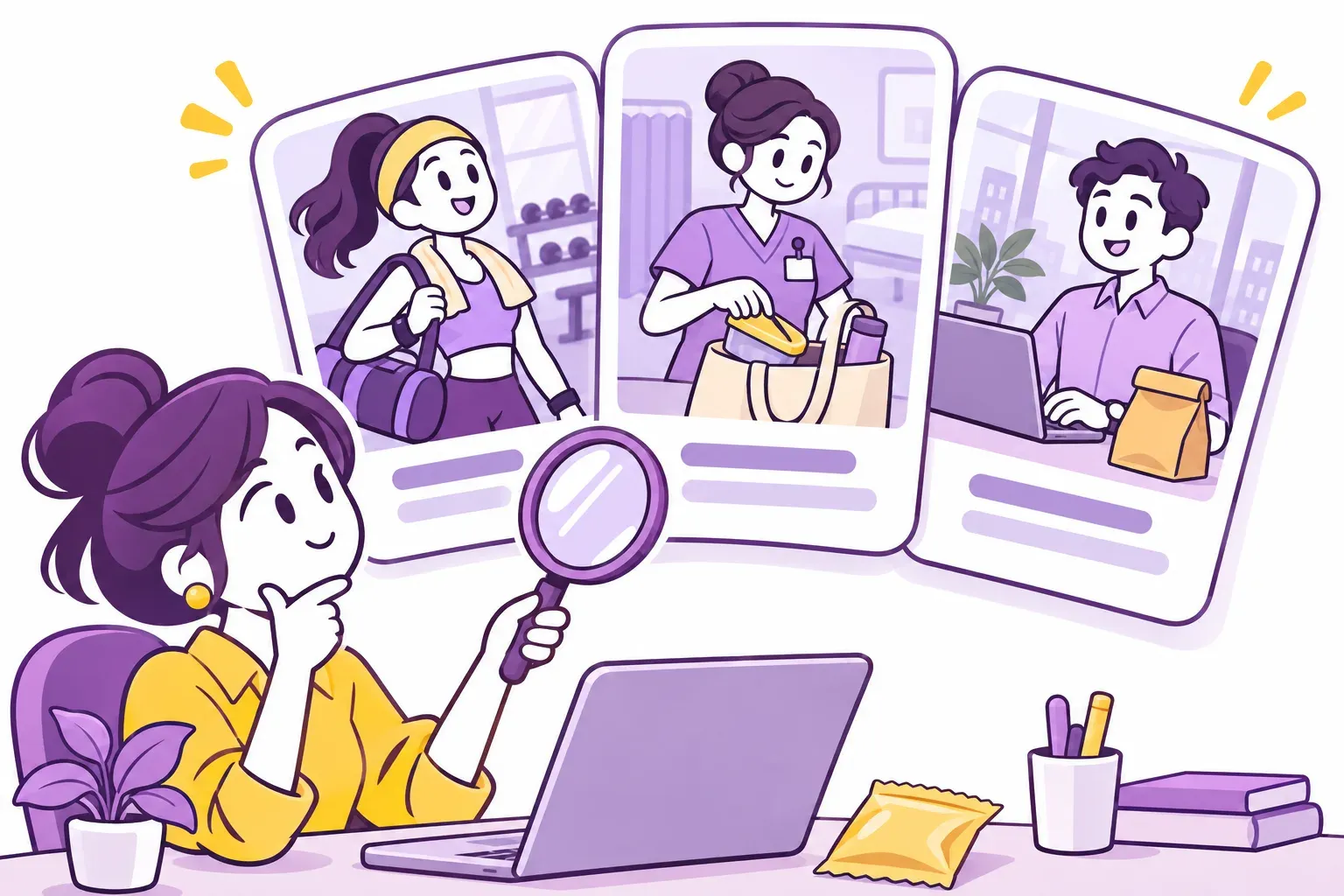
To find influencers for your brand, figure out who buys your product and what else your customers are into. Ask them who they watch, then search for influencers on those topics. No customers yet? Start with educated guesses about who needs your product and when. Then check each influencer’s audience and compare rates.
Say you sell healthy snacks. Wellness, healthy eating, and fitness probably come to mind first. But your customers may watch something completely different. A “what’s in my bag” video, for example, has plenty of room for a snack to get through the day.
Start with your customers
Look at your orders, any customer data you have, reviews, and the questions people send you. Pull together what you already know:
Who buys. Where your customers live, which products they choose, and what you know about their ages and interests.
Why they buy. When they use your product, why they picked it, and what they compared it with. Someone might buy a snack for the ingredients, or because it’s easy to eat on the go. Ask your customers which reason matters most.
What drives the choice. What they praise, what they complain about, and what they ask before buying, whether it’s price, taste, packaging, or something else.
If you don’t have enough to go on, ask your customers:
- How did you first hear about the product?
- What did you buy it for, and what problem were you trying to solve?
- What mattered most when you were choosing? Why?
- What are you into? Which topics and influencers do you follow regularly? What do you like about them?
Ask for links to accounts or posts. Ask about everything they watch, not just influencers connected to your product.
Put the most weight on answers from people who actually bought from you. Comments from people who haven’t bought the product, and your own guesses, are less reliable. And don’t draw conclusions from a single answer. If one customer names an influencer, that’s a lead worth checking, not proof that everyone feels the same way.
Look beyond your niche
There are two ways to come up with ideas for which influencers to look for.
Think about where and when people use your product. Start with influencers who cover your product’s topic. For a snack, that’s wellness and healthy eating. Then add influencers who might need it at school, on the road, or at work. Here are some options for our hypothetical snack.
| Who to look for | Possible post idea |
|---|---|
| Wellness and healthy-eating influencers | A snack review covering ingredients and taste |
| Fitness influencers | What’s in their gym bag for a workout |
| Students who post study vlogs | A snack between classes or while studying for exams |
| Travel influencers | Packing for a trip and bringing food for the road |
| Nurses who post about their work | What to bring for a long shift, including a snack |
| Influencers who post about office life | What’s in their work bag, including food for the day |
These are just guesses for now. First find influencers with the right jobs and topics, then decide what to pitch to each one.
For nutrition and fitness influencers, check whether they’ve promoted similar products and how they showed them. If someone has already promoted a snack, that’s no reason to rule them out. Think about what makes your product different and how to show it in a fresh way.
Find out who your customers follow. If customers named influencers in your survey, look at those accounts. Say some answers mention tech reviews or comedy videos. Add those topics to your search, then check whether those influencers’ audiences include your customers and what kind of sponsored content could work for them.
Pick a few of these ideas to start with.
Where to look for influencers
Which social platform to use
Search on the platform your customers use. Consider which country you sell in and what language your customers speak. If customers have mentioned specific platforms, or you know where your orders come from, start there. If customers sent you links to influencers, look at those accounts first.
If you don’t have that information, search for influencers on your topics across a few platforms. Pick the one where more of them post regularly.
For this example, let’s focus on the US and search in English. Who might need a snack during the workday? You could look at influencers who post about office life, or try a less obvious group: nurses who share what their shifts are like. Let’s assume a ready-to-eat snack would fit naturally into a video about getting ready for work.
Search on social media
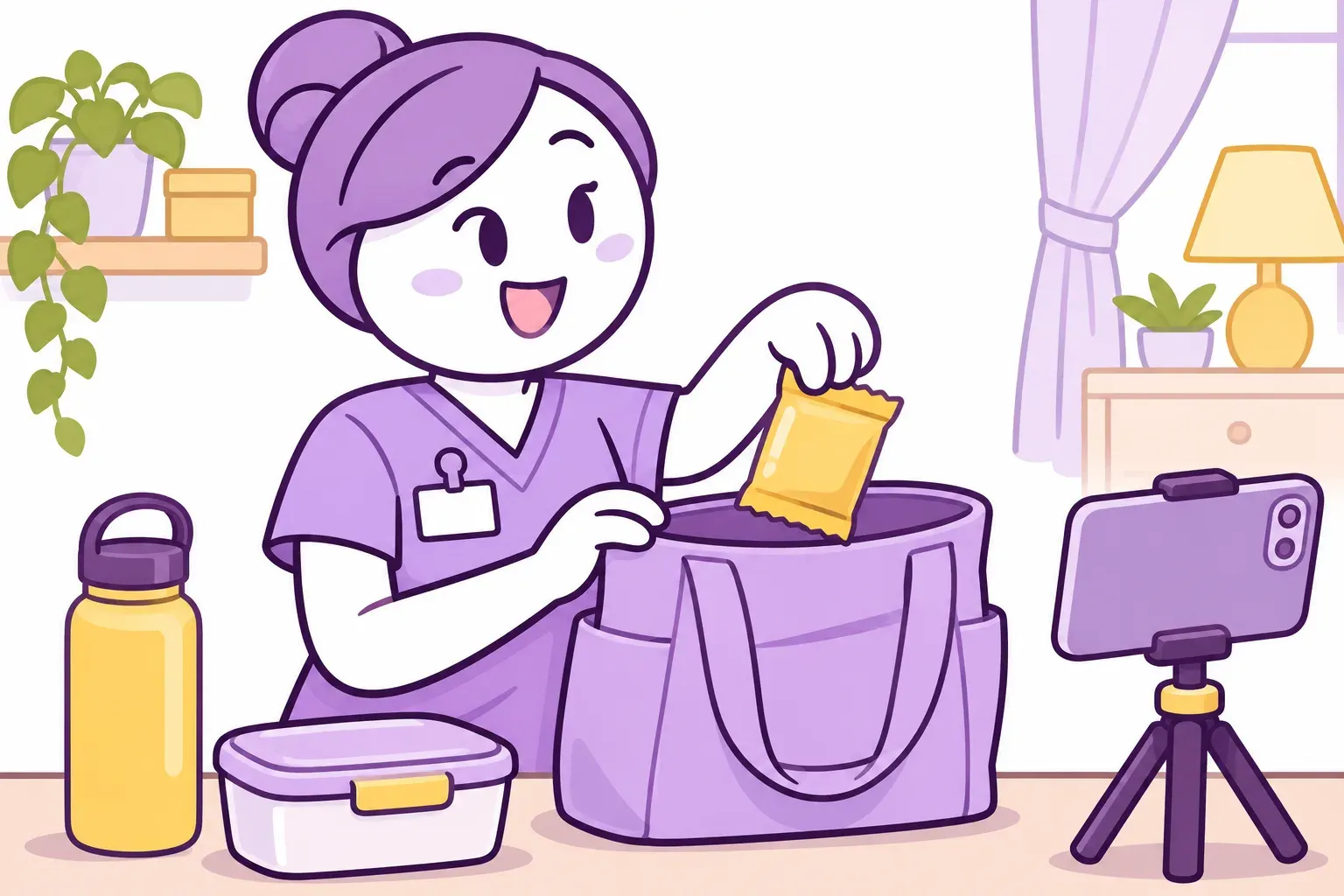
On Instagram, TikTok, or whichever platform you chose, search by the influencer’s job, activities, and daily life. For our example, you could try these keywords and hashtags:
| Who you’re looking for | Keywords | Hashtags |
|---|---|---|
| Nurses with personal accounts | nurse vlog, day in the life of a nurse |
#nurselife, #nursevlog |
| Influencers who post about office life | corporate day in the life, 9 to 5 vlog |
#officelife, #workvlog |
You can also search what's in my work bag. Videos about what people carry to work are an easy way to find influencers and see how they film this kind of content. They don’t need to have talked about food before. You can pitch the idea if it fits their usual content and would interest their viewers.
Borrow wording from the posts you find. Notice what influencers call these videos and which hashtags they use, then search with those.
If your results show job listings or training materials, add vlog or day in the life. If you get too many mixed results, narrow down the job or the part of the workday. If you’re seeing stores and products, try a phrase an influencer would use for their own video, such as what's in my work bag.
Open a promising post and go to the profile. See what the influencer usually talks about, how they film their daily life, and whether your idea would fit in.
Keep all promising influencers in one spreadsheet. For each one, note a link to the post where you found them, what caught your eye, what you could pitch, and what you still need to check.
Search on Google
You can also use Google to find people by job and lifestyle, then go to their social accounts. Add influencer or vlog to your topic. If you run a local business, add a city name too, and see our guide on how to find local influencers. When you find a post, open the profile and see what the influencer is posting about now.
Look at similar accounts
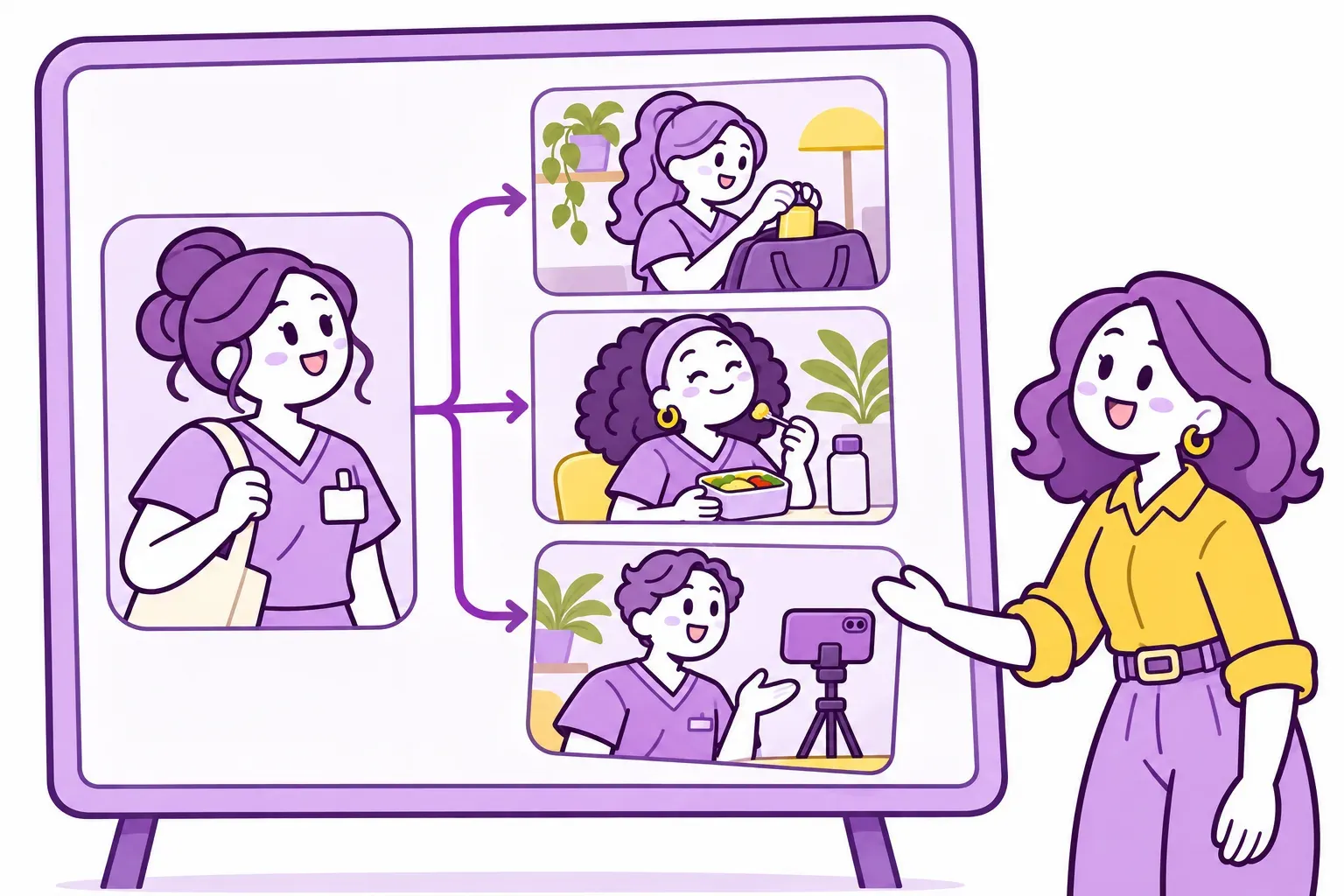
For an influencer who fits, see who they collaborate with and who they tag. Also check the similar accounts the platform suggests. If an influencer looks right, add them to your spreadsheet.
Look at people who already know your brand
See who tags your brand in posts, mentions your product, or comments on your social accounts. Some of them may be influencers who already use your product and can explain why it’s useful.
Look at other brands’ sponsored posts
Find sponsored posts for similar products, or for things people use in the same situations. In our example, that could be other snacks, food containers, or things people bring to work.
See how the influencer presented another brand’s product, then look at their regular posts. Save a link to the sponsored post so you can later compare how different influencers show products.
Use influencer search tools
There are paid influencer databases, and some social platforms have their own tools for finding creators. They usually let you filter by platform, topic, and audience country. Open the profiles you find and check whether their posts fit your campaign. If you get too few results, broaden the topic or follower range. If many are a poor fit, refine your keywords and filters.
For example, TikTok One offers keyword search under Explore creators → Creator search, with separate filters for creator details and audience details. For our example, you could try terms about nursing or office life and filter for a US audience, then review both regular and sponsored videos.
Don’t pick influencers on follower count alone. Look at your goals, views, and budget too. We cover this in our guide on how to choose the right influencer.
Before paying for a database, check whether it covers the countries and platforms you need, where the data comes from, and when it was last updated. Platform tools aren’t available to everyone, so check your access in your ads account.
Putting together a list for the snack brand
Let’s go back to the workday snack.
Separate personal accounts from organizations. Say the searches from the table above turn up nurse vlogs, clinic pages, and training programs. Keep the nurses who show their own workday. You could ask them to feature the snack in a video about their shift.
Check where the influencer lives. Say the snack ships anywhere in the US, so there’s no need to limit the search to one city. Bios, place mentions, and location tags show where an influencer lives and works. Look at several posts, since a single tag might be from a trip. But where an influencer lives doesn’t tell you where their viewers live. Use analytics to see how many of their viewers are in the US.
Find similar influencers. Take a personal account with recent videos about workdays and open the similar accounts the platform suggests. If you start from a clinic’s page, the platform will suggest more clinics. Check each new influencer separately.
Who to keep and who to cut

Check influencers as soon as you find them. An influencer’s job can give you an idea for how to show your product, but it doesn’t tell you who watches them. First ask yourself whether their viewers need your product. For our snack, check whether their audience includes people who bring food with them.
In an experiment with a fashion influencer’s followers, viewers were more likely to see a product as right for them when it suited the influencer and they saw the influencer as similar to themselves.
Look at the data you can get:
| What to check | What to note |
|---|---|
| Content | Topics, style, and a post that shows why they might suit your campaign |
| Audience | Share of viewers in your target country and other traits that matter for your product |
| Views | View counts for comparable posts, with dates and formats |
| Engagement | What viewers talk about and the questions they ask |
| Past sponsored posts | How the influencer presents products and which brands they’ve worked with |
| Data source | Public profile, a tool’s report, or analytics from the influencer |
Look at all recent posts in the same format, not just the most popular ones. Review sponsored posts separately: an Instagram study found that audience responses varied with how the product was presented and the influencer’s audience size. Views and comments don’t tell you how many people bought.
Check audience location with analytics, not by the language of the posts or where the influencer lives. If likes or comments look odd, dig deeper, but one red flag isn’t enough to call it fake engagement.
After checking, sort your list:
- Cut: you’ve confirmed the audience or content doesn’t fit your campaign.
- Ask for data: the content fits, but you’re missing key information, such as viewer analytics.
- Discuss a sponsored post: the main requirements are met; you still need to agree on price, scope, and timing.
Note the reason next to each decision. If many accounts don’t fit, go back to your search terms and topics.
What to ask an influencer
Reach out to influencers who passed your first review or whose data you need to confirm. Name the product, suggest a format, and explain what caught your attention about their account.
Ask for:
- Any audience and view analytics you’re missing, with the date and the period they cover.
- Examples of similar sponsored posts and any results they can share.
- Their rate, the format, and what’s included.
- Timeline, approval process, and how the product will be shipped.
- Usage rights and any restrictions on working with competitors.
Check whether the analytics they send describe account followers or people who viewed the posts. How to write the first message and handle follow-ups is a topic for a separate article.
Compare the remaining candidates
Once you have a rate, compare it with how many views their similar posts get and what share of their viewers fits your audience. If only a small share fits, that’s not automatically a reason to pass. What matters is how many of the right viewers you reach for the money. The cheapest post isn’t necessarily the best deal.
Compare offers with the same format, number of posts, and usage rights. Include product shipping in your budget, plus filming if it’s billed separately. If an offer is over budget, discuss a smaller scope or keep looking.
Let your first campaign guide the next search
Before your first sponsored post, write down what you want to test. For example: “Will showing the snack in a video about getting ready for a shift drive clicks to the product page?” Agree on what analytics the influencer will share and set up a separate tracking link with UTM parameters.
After the campaign, add the cost, the published post, and the results to the influencer’s entry. Use that to decide which directions to keep exploring and who to work with again. If you changed the influencer, the content, and the terms all at once, a single result won’t tell you what made the difference.
Frequently asked questions
Where can I find influencers for my brand?
Search social media by an influencer’s job and lifestyle, use Google, check suggested similar accounts, look at people who already tag your product, and study sponsored posts for similar products. There are also influencer databases and platform tools such as TikTok One.
How do I know which influencers to look for?
Start with your customers. Find out who they are, why they buy your product, and which influencers they follow. Look beyond your own niche. A snack, for example, could fit a nurse’s video about getting ready for a shift.
How do I vet an influencer before booking a post?
Look at their posts, views on similar videos, how viewers react, and their past sponsored posts. Use analytics to see how many viewers are in your target country, rather than going by the language of their posts. Ask the influencer for anything that’s missing.
Can I choose influencers by follower count?
Only alongside your goals, views, and budget. What matters is how many of the right viewers you reach for the money.
Don’t have time to search yourself?
You can hand the search off to an agency. Check what’s included: a list of accounts, audience checks, rate requests, outreach, or running the whole campaign. Ask to see a sample shortlist and have the agency explain why they picked those influencers. Our guide on how to choose an influencer marketing agency covers what else to ask.
Talk to EPICSTARS about what you sell, where you sell it, and what you want the campaign to achieve.