How to Choose an Influencer Marketing Agency
Choose the agency that gets your offer in front of the largest share of your target audience for the least money. Everything else matters less. The only way to check this is in practice: a small first campaign and a report on every step — how many influencers were found, how many were contacted, how many agreed, and what each post cost.
Do you need an agency at all?
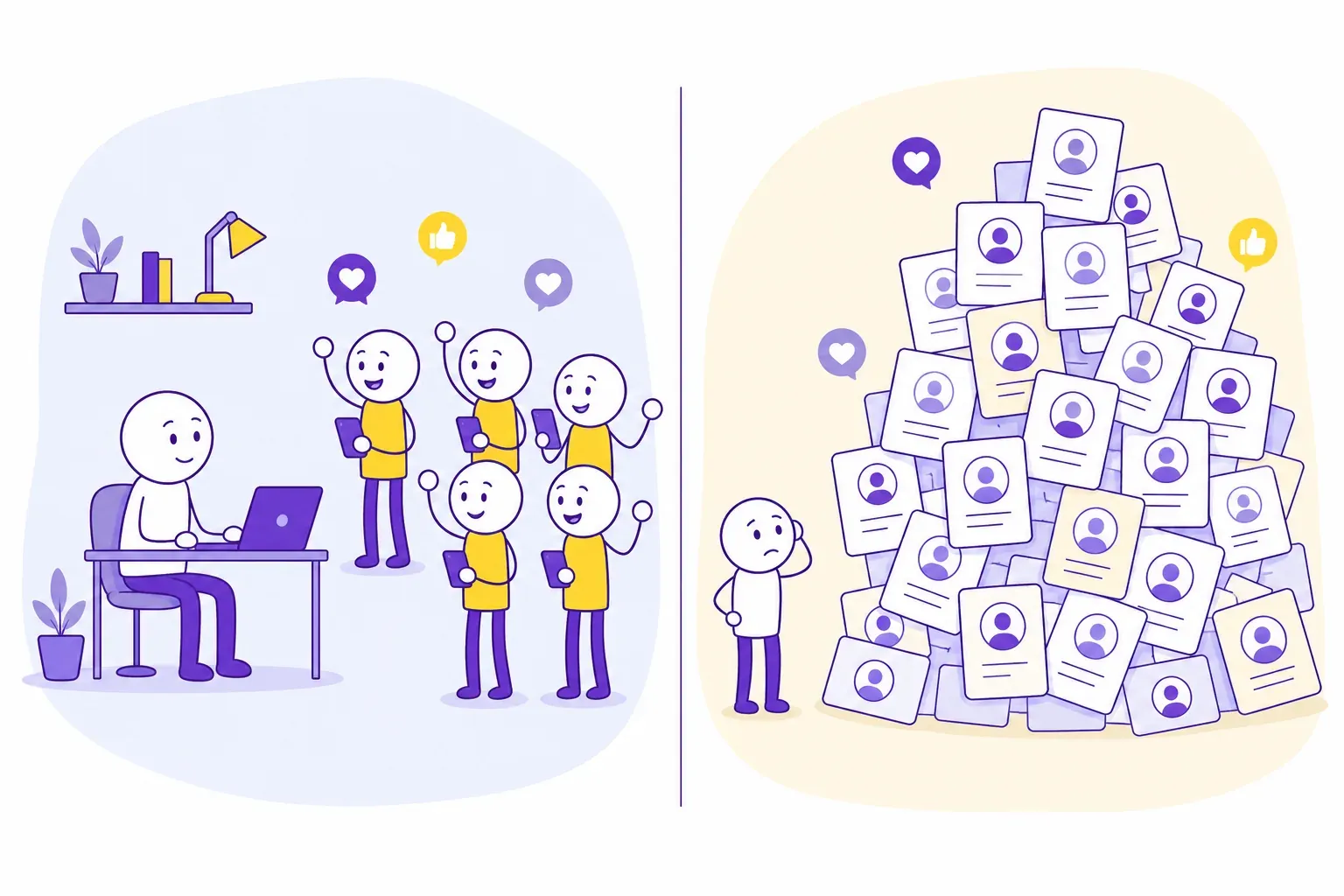
If you have the time to try it yourself, do. Pick influencers you like, message them, and propose a collaboration. Five influencers you already follow will take a few evenings, and you will learn more about the channel than from any report.
You need an agency when the work no longer fits into those evenings: reviewing fifteen hundred accounts to pick the twenty that fit, or finding people who will physically walk into your store. An agency’s value is in volume, process, and tools, not in knowing how to write a message.
What should your first campaign look like?
Your first campaign should be cheap, clear, and fully transparent. It’s better to start with micro-influencers. Don’t take too few or too many: around twenty if you sell online and want to test different creatives and audiences; five or more if you have a physical location and need people to show up. The rest is detail.
The first campaign is an experiment. You are not buying posts — you are buying an answer: does the channel work, and does this agency work.
That’s why transparency matters — and it’s not about trust. It’s about being able to repeat the result. Say you put $1,000 into a black box and got ten sales. Does that mean the next $1,000 brings ten more, and $10,000 brings a hundred? No. You don’t know what limits the result — influencer response, the number of posts, or conversion to purchase — so you don’t know what to buy more of.
If instead you saw the shortlist, the outreach, the posts, and those ten sales, the second campaign stops being a gamble — you start planning the result. You know which step is the bottleneck, and you buy exactly that.
Can the agency solve your problem?
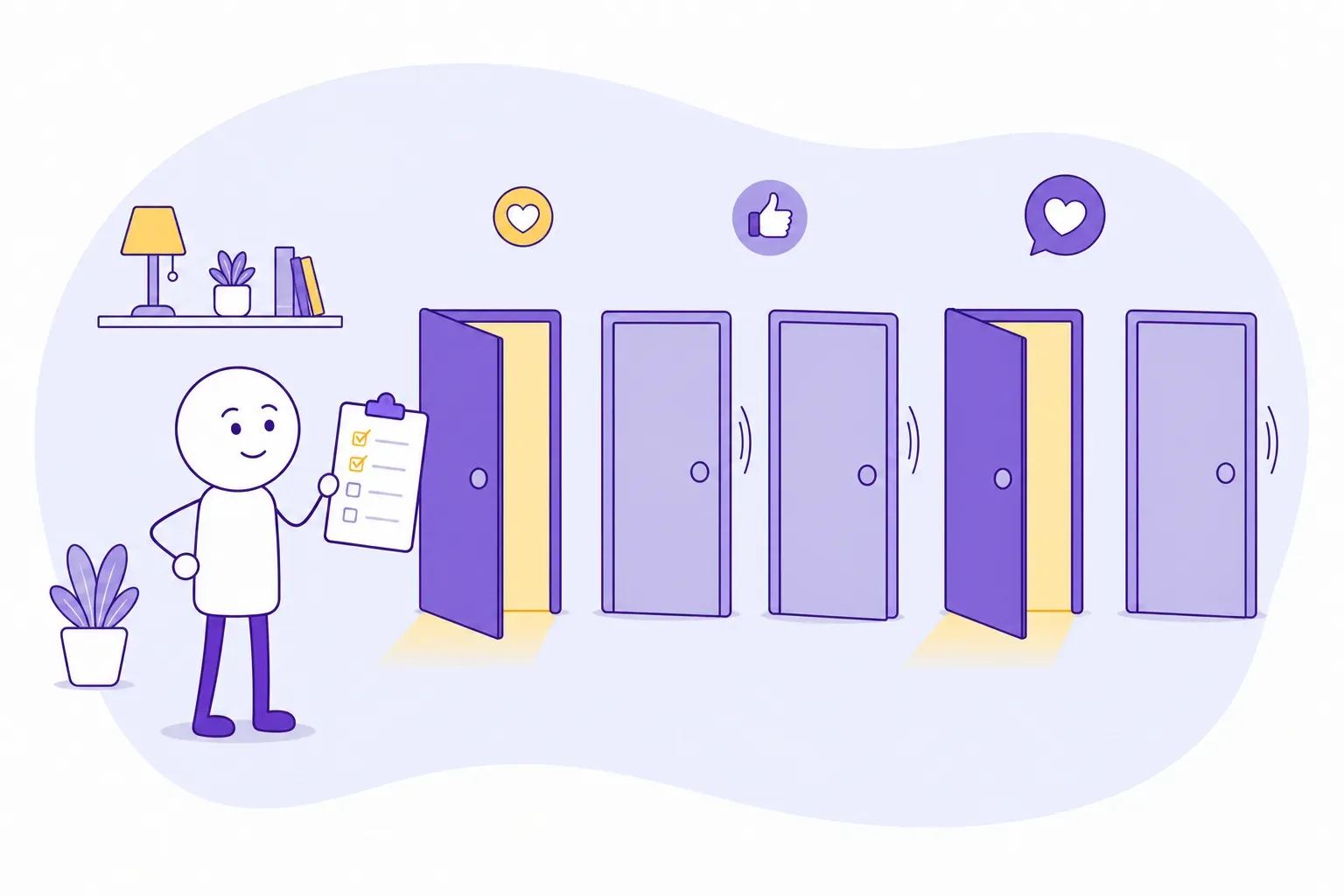
Agencies are not universal. Some focus on e-commerce, some on mobile apps, and some only do Instagram. Most agencies drop out at this step, before any talk about money — and this is the cheapest check of all. But you can only run it once you know what you want.
Before you write to anyone, answer these for yourself:
Who you want in the campaign. Influencers who do sponsored posts regularly — easier to negotiate with and more predictable. Or those who have never done one — their audience trusts them more, but they take longer to find and are harder to convince.
Whether a visit is needed. Does the influencer have to come to you in person, or can everything be done remotely?
Whether your category has restrictions. Alcohol, healthcare, finance, adult content — some agencies and platforms won’t take them.
All of the work or part of it. Are you handing over the whole campaign or just a piece — for example, the agency finds influencers and you handle the conversations?
All at once or step by step. One full campaign, or a small first part after which you can stop.
Whether you need the content on your own channels. By default you buy only the post on the influencer’s account. Using the video yourself — on your website or in paid ads — requires usage rights, which are agreed separately.
Then check the basics on the agency’s side: platform (they do Instagram, you need YouTube), geography and language, and capacity — can they handle a hundred gifted posts, or do they run ten at a time?
Your answers to these questions are your brief for the agency. With a brief like this, many will drop out at the very first email — not because they are bad, but because they do something else.
If you run a local business, finding local influencers is a separate topic.
What results should you expect?
Influencer marketing rarely works as “pay the agency → get a stream of customers.” There are too many variables: influencer selection, the offer, the post format, the content, and how the audience reacts.
So a good agency should show you what happened at every stage:
- how many suitable influencers exist in your niche and how many are still untouched, and whether there are enough for a second campaign;
- how many influencers were found and how many were contacted;
- how many replied and agreed;
- what one post cost;
- which formats and influencers delivered results.
It’s normal for results to take a few rounds. It’s not normal for the process to be hidden.
The difference between transparent and opaque is not whether you will dig into the reports. You may well not. The difference is that you can check a transparent campaign later if you need to. An opaque one, never.
One question checks this before the work starts: will you show me how many influencers you contacted and how many said no? If those numbers aren’t collected during the campaign, nobody can reconstruct them afterward.
Bad
We ran a very creative campaign. Made merch, decorated everything — it didn’t work. Bad result.
Good
We tested offer X with audience Y. Picked influencers Z and offered them a gifted collaboration. 3% accepted. We ran N posts. 30% of them had a positive ROI — they brought in more than they cost. Next, we keep the ones that paid off, look for similar influencers, and drop the format that didn’t work.
What it looked like in one real campaign
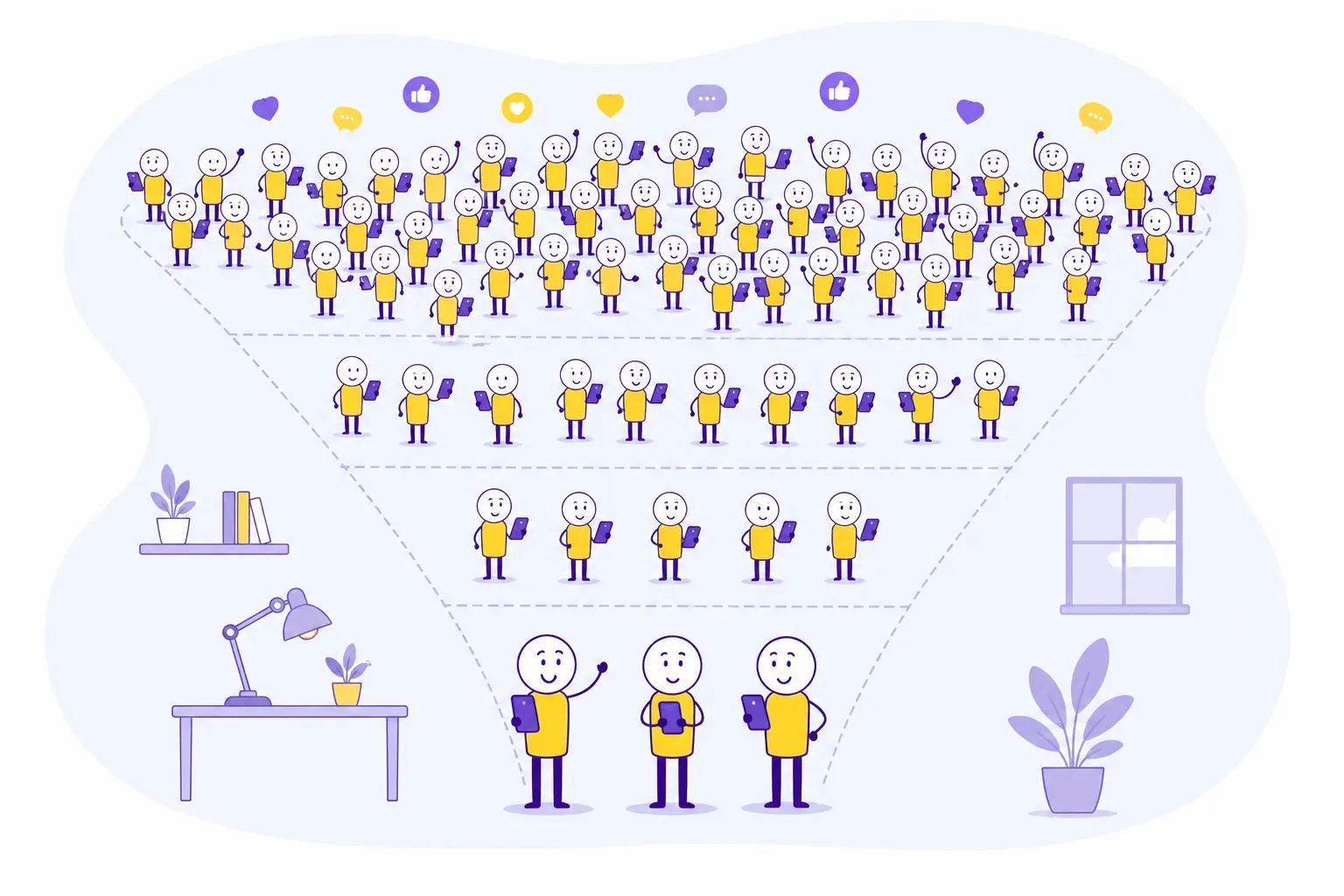
Skincare for women over 40, Instagram, gifted product instead of a fee. We selected and messaged 1,700 influencers: 90 replied, and 51 posted. Before the start we expected a 4% response rate; we got 5.3%. Wellness bloggers didn’t work; homemakers over 40 — “just like me” — did. In the next round, almost a third of the posts came from influencers who had performed well in the first round.
That’s one campaign in one category — your numbers will be different. But a report like this is what tells you who to look for next time.
How fast will you launch?
Launch speed is a resource. While calls, approvals, and “we’ll prepare a proposal” drag on, you’re spending time and getting nothing back.
Ask for timelines step by step: how long until a shortlist, until the first agreements, until the first post. An agency that works at volume will give you these numbers right away — it has them. The rest will say “it depends.”
The same yardstick applies to just starting a conversation. If the only way to get a price is to book a call, you’ve already paid — with an hour of your time, before seeing a single influencer.
What are the red flags?

They only offer influencers from their own roster. So they pick from what they have, not what fits you — and they make money on each one without telling you how much.
The price comes as one lump sum. You can’t see how much of it reaches the influencer and how much stays with the agency. The markup on influencer fees is a separate cost most buyers don’t know exists: 15–30% in the US market, closer to 15% at smaller agencies and up to 30% at large ones.
They promise results without asking about your economics. They don’t know what a customer is worth to you or whether customers come back, but they already know it will pay off.
They report total followers as impressions. That’s not a measurement — it’s a theoretical ceiling: how many people would see the post if every follower were real and online at the same time.
They won’t say anything before a call. If the pricing model and scope of work can’t be put in an email, they don’t want to commit to them. They won’t show them later either.
They demand a retainer or an annual contract upfront. The first campaign is an experiment. If an agency won’t work at small volume, you pay a year ahead without knowing whether the channel works.
They suggest influencers without asking about your product and audience. Then they are selling reach, not your offer.
They guarantee reach or impressions. Those are cheap to inflate. The only honest guarantee is that the posts will go live.
They won’t hand over the data after the campaign. If you’re left without the list of influencers — who agreed and at what price, who declined and why — your second campaign starts from zero.
What will you still have to do yourself?
An agency can do part of the work for you, but it can’t take on your risk as a business owner: what to sell, to whom, and at what price. Even an agency that only charges per sale doesn’t take that risk on — it avoids it by picking what already sells and leaving when it stops selling.
So there are three things nobody will do for you.
Know your audience. Look at the people who leave reviews and buy. Not the ones you’d like to have — the ones who already pay.
Know your message. One idea a person should walk away with. Without it, the agency can only optimize the one thing it knows — audience size. And that is what you’ll be sold.
Know how you’ll measure. Decide in advance how you will know what worked: a promo code, a dedicated link, a “how did you hear about us” question. And check that the influencer’s audience can actually use it. Otherwise you’ll get a perfectly transparent report on the process and still not know whether anyone came.
How much do influencer marketing agencies charge?
All else being equal, price is the most important factor. It determines your profit.
What are you paying for?
Not how much, but for what. Agencies charge for this work in fundamentally different ways — from “do it all yourself” to a monthly management fee. Here is the full range with typical figures:
| Model | Typical range |
|---|---|
| Self-serve platform or marketplace | From $0. Free or subscription access; you pay the influencer directly (with gifting, only the cost of the product and shipping). Search, negotiation, deadlines, and control are all on you |
| Full-service, priced per deliverable | From ~$800 for a small campaign. Search, negotiation, and execution are on the agency |
| Hourly | $100–300 per hour |
| Fixed project fee | $5,000–15,000 for a small campaign, $25,000–100,000+ for a large one |
| Monthly retainer | $3,000–25,000 per month, depending on agency size |
| Percentage of budget or of influencer fees | 10–30% |
| Per sale (performance-based) | You pay only for sales; such agencies are very selective about whom they take on |
Figures are a guide, not a price list: typical US market ranges from public industry reviews, 2026.
Most of these models won’t suit you, and that’s fine. Treat the table as a map: it shows where a conversation might take you, not a menu you have to pick from. The gap between the first row and the second is the price of having the work done for you.
Every model comes with its own incentives. Hourly billing rewards the agency for spending more hours. A fixed fee rewards keeping the project within budget and spending fewer resources on it. A retainer rewards keeping the client while spending less on them (seniors sell, juniors run the campaign). A percentage of influencer fees rewards working with more expensive influencers.
So look not at the total, but at what you get at each step.
What unit should you pay for?
Per sale — rarely. Such agencies exist, but they are very selective about whom they take on: they don’t absorb the risk, they avoid it. And a sale reduces everything to one number that doesn’t tell you what to fix.
Not per view. Views get inflated, and you need views from your audience, not just any views.
Per step the agency is actually responsible for: an influencer sourced, outreach sent, a post published. That price can be checked, and the result can be broken down by step and repeated.
Don’t compare total invoices. For the same $800, one agency will deliver five posts and another just one. Compare the price per post for influencers with similar follower counts.
Frequently asked questions
Which influencer marketing agency is the best?
The one that gets your offer to the largest share of your target audience for the least money. That isn’t dodging the question — it’s the only answer that works. There is no “best in general,” because you have a specific offer and a specific audience, not abstract ones.
How much do influencer marketing agency services cost?
There is no single rate, and an agency quoting one before understanding the scope is guessing. The total depends on the platform, influencer size, the number of influencers, and how much of the work stays with the agency. The very first reply should explain how the price is built, not just give you a number.
What does an influencer marketing agency actually do?
It finds suitable influencers and vets them, reaches out and negotiates terms, manages content production and deadlines, collects data, and reports on results. Some agencies add strategy and paid promotion of the published posts. The set of services looks alike everywhere — what differs is what you get at the end and whether you can verify it.
How can you tell a real agency from a fly-by-night one?
A website, reviews, and the age of the domain don’t guarantee anything, but they lower the odds of running into a fly-by-night agency.
More importantly, limit how much you can lose. Don’t pay a large sum upfront — pay step by step: for the influencers found, then for outreach, then for published posts. Before each next payment, ask for the result of the previous step: the list of influencers found, the conversations, the agreements. A fly-by-night scheme depends on a big upfront payment. When you pay step by step, there’s nothing for it to take.
An agency says “25% of influencers reply to us.” Is that a lot?
The number means nothing on its own. The response rate depends on the channel (email or DMs), the offer (gifting or paid), and influencer size. Ask for all three. An agency that does the work itself will name them right away.
Does influencer marketing actually pay off?
Our view: there is really no other kind of marketing. People buy what other people recommend — the only question is whether that process is organized or left to chance.
That doesn’t mean every campaign pays off. Payback comes down to the arithmetic of your category: what a customer is worth, whether they buy again, how many posts you need to see a clear signal. An agency that says “yes, it pays off” without a single question about your economics isn’t answering you.
Which platform matters most for influencer marketing right now?
The main venues are social networks, and that’s where to look; which one depends on your audience, not on popularity rankings.
What matters more than the platform is how “fresh” the influencer is. The fewer agencies and platforms have already used them, the better the chance your sponsored post will be the first of its kind on their channel and earn more of the audience’s trust.
Shouldn’t we just build an in-house team?
Not to find out whether influencer marketing works for you. For that, testing with an outside team is cheaper and faster — on one condition: you get a full report on how the campaign was run. Which marketing messages were tested. What search terms were used and how many influencers were found. What exactly was sent and how many agreed. What came of it. Without that report you bought posts, not an answer, and the test taught you nothing.
Once you’ve decided influencer marketing is your channel, an in-house team makes sense. But for a narrower set of tasks than people usually assume. Keep what is truly your business: forming and testing marketing hypotheses, deciding what is said and to whom, measuring results, and managing direct relationships with the few large influencers and celebrities where the relationship itself is the value. The routine — building lists, searching, negotiating, chasing deadlines across dozens of influencers — is better outsourced. It scales with headcount, not with understanding.
Why is it better to work with micro-influencers?
Twenty small influencers versus one big one means twenty attempts to hit the right creative and audience instead of one. Spread first, then concentrate: once it’s clear what works, you can move to bigger influencers.
Why twenty?
With fewer, a single hit or flop decides the whole result, and you won’t know what it was: the channel, a particular influencer, or luck. For brick-and-mortar businesses, five or more is enough: the audience is narrow and tied to a location, so the effect shows up faster.
Put us to the test
An affordable, transparent agency is a good tool for growth. But it won’t build your business for you.
Answer four quick questions — your goal, your platform, how you’d like to work (step by step from $300 per stage, or full-service from $1,500), and how to reach you. We’ll email you within one business day to discuss the details.